
 Facebook
 X
 Pinterest
 Copy Link
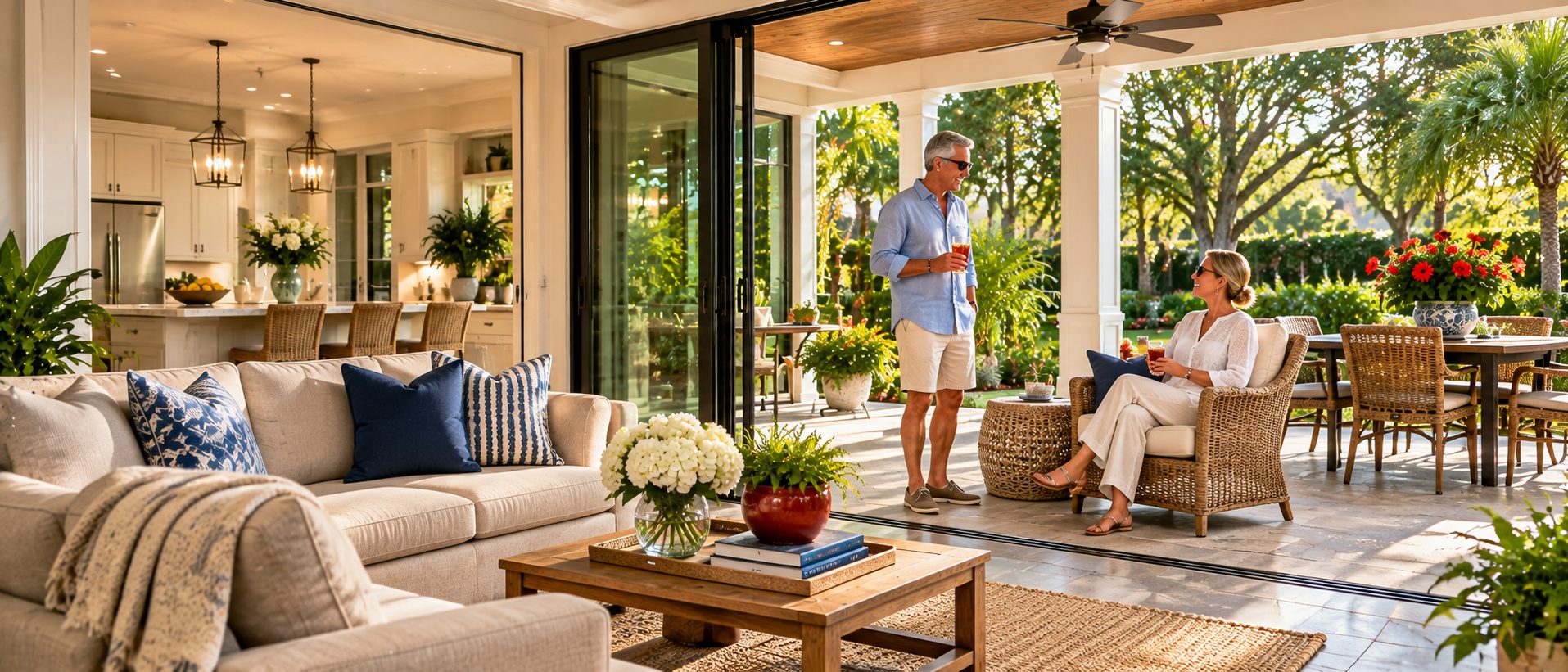
Why gathering spaces, outdoor living, and flexible layouts deserve more attention than square footage alone.
There’s a moment during almost every home search when a particular feature catches your attention.
Maybe it’s a beautiful kitchen, a spacious living room, or sliding glass doors that open onto a lovely outdoor area.
It’s easy to imagine yourself living there.
But when I’m helping buyers explore homes in Central Florida or along 30A, I encourage them to look a little further than that first impression.
Because the spaces that make a home beautiful aren’t always the same spaces that make it wonderful to live in.
And sometimes, the features you’ll appreciate most aren’t the ones that immediately catch your eye.
Start With How You Actually Spend Your Time
Before getting too attached to a floor plan, think about what an ordinary day looks like in your household.
Do you enjoy preparing meals while family and friends gather nearby?
Do you prefer a quiet place to read in the morning?
Are weekends spent entertaining, relaxing outdoors, or exploring your community?
There’s no single right answer.
A home with a large formal dining room might be perfect for someone who loves hosting dinner parties. Another buyer might get far more enjoyment from a comfortable kitchen island where everyone naturally gathers.
That’s why I believe lifestyle should drive your home search—not just square footage.
The goal isn’t simply to find a home with enough room.
It’s to find one where the rooms make sense for your life.
Gathering Spaces Should Bring People Together Naturally
One of my favorite things about Florida living is how easily time with family and friends can become part of everyday life.
Whether it’s a casual afternoon with neighbors, a weekend visit from relatives, or a holiday gathering, a home that welcomes people comfortably can be a real pleasure.
But a wonderful gathering space doesn’t necessarily require an enormous living room.
Sometimes it’s the relationship between the kitchen, dining area, and family room that makes all the difference.
Can someone prepare dinner while still enjoying the conversation?
Is there enough comfortable seating without making the room feel crowded?
Can guests move easily between indoor and outdoor areas?
These are the details that make entertaining feel relaxed rather than complicated.
In my recent article about making your Florida home a gathering place, I explored how the most memorable moments often happen in the simplest settings.
When you’re touring homes, try imagining those moments in the spaces you’re seeing.
You may discover that a thoughtfully arranged home feels more welcoming than one with significantly more square footage.
Outdoor Living Is Part of the Florida Floor Plan
In Florida, outdoor living deserves almost as much attention as the rooms inside.
A covered lanai, screened porch, shaded patio, or balcony can become one of the most frequently used spaces in a home.
But there’s an important difference between an outdoor area that photographs beautifully and one you’ll actually enjoy using.
Consider the direction of the afternoon sun.
Is there enough shade during the warmer months?
Does the space offer privacy?
How easily can you access it from the kitchen or main living area?
Is there protection from insects or changing weather?
Along 30A, coastal breezes and beautiful views can make outdoor spaces especially appealing. In Central Florida, covered lanais and screened pool areas often become extensions of the living room.
In either location, the practical details matter.
A lovely patio that receives intense afternoon sun without adequate shade may be less useful than a smaller, well-designed covered space.
And a beautiful balcony may not provide the experience you’re imagining if there’s little room for comfortable seating.
The best outdoor spaces aren’t necessarily the largest.
They’re the ones that invite you to spend time there.
Flexible Rooms Can Be More Valuable Than Extra Rooms
Life has a way of changing our plans.
A home office may eventually become a guest bedroom.
A spare room might serve as a hobby space, a quiet retreat, or a place for visiting grandchildren.
For second-home buyers, a flexible layout can be especially helpful when the number of people staying in the home changes throughout the year.
That’s why I encourage buyers to think about how rooms could serve more than one purpose.
A bedroom located away from the main living area might provide welcome privacy for guests.
A small den with good natural light could become a favorite reading room.
An open loft might be perfect for visiting family but less practical if someone needs a quiet place to work.
It’s worth asking whether the home’s layout allows you to adapt without making expensive changes later.
Flexibility isn’t about having a room for every possible situation.
It’s about choosing spaces that can grow and change with you.
Pay Attention to How the Home Flows
One of the most useful things you can do during a showing is walk through the home as though you already live there.
Imagine carrying groceries from the garage to the kitchen.
Think about where guests would enter and gather.
Consider whether the primary bedroom offers enough separation from the busiest parts of the house.
Look at how the living areas connect to the outdoor spaces.
These small observations can reveal a great deal about how comfortable a home will feel over time.
I’ve seen how an attractive floor plan can become less appealing when everyday movement feels awkward.
And I’ve also seen how a modestly sized home can feel wonderfully spacious because the rooms connect so naturally.
Good flow isn’t always something you notice in listing photographs.
It’s something you experience when you’re there.
Think Beyond the First Few Months
The excitement of moving into a new home is wonderful.
Everything feels fresh, and there are so many possibilities to imagine.
But I also encourage buyers to think about what they’ll appreciate after that initial excitement settles.
Will the layout still work when your routines change?
Will the outdoor space be comfortable enough to use regularly?
Will you enjoy maintaining the features that attracted you to the property?
Will there be room for the people and activities that matter most?
These questions connect closely to choosing a home you’ll still love five years from now.
The most satisfying purchases often come from looking beyond the excitement of move-in day and considering the experience of living there year after year.
Beautiful Is Wonderful. Comfortable Is Even Better.
I appreciate beautiful homes. Florida certainly has plenty of them, from charming Central Florida neighborhoods to elegant coastal properties along 30A.
But what I love most is helping someone recognize a home that truly fits.
Sometimes that means finding a spacious property designed for entertaining.
Sometimes it’s a smaller home with a wonderful covered porch and just the right amount of room.
And sometimes it’s discovering that the feature you thought you needed isn’t nearly as important as something you hadn’t considered.
That’s part of what makes the home search so interesting.
It’s not simply about finding the most impressive property.
It’s about understanding what makes a home feel right for you.
If you’re exploring homes in Central Florida or along 30A, I’d be happy to help you look beyond the photographs and consider how each property might fit the life you’re creating.
Because the best homes don’t just make a wonderful first impression.
They continue to feel right long after move-in day.
Marcella
From Orlando to 30A – beautifully lived.
