
 Facebook
 X
X
 Pinterest
 Copy Link
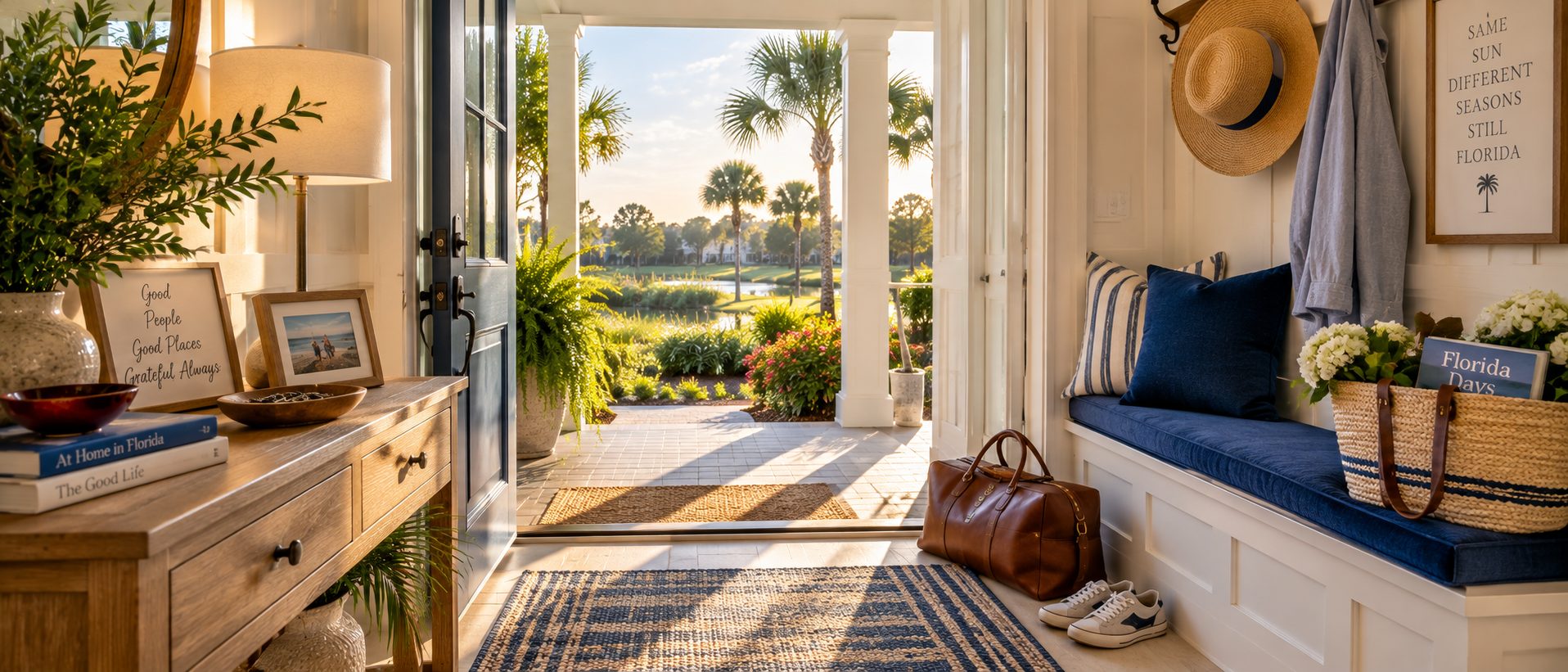
For some people, Florida is home.
For others, it’s the place they look forward to returning to.
And increasingly, I meet people who aren’t quite sure which of those they want it to be.
They may imagine spending winters in Central Florida, escaping to 30A whenever they can, working remotely for part of the year, or eventually making Florida their permanent home.
The good news is that there isn’t one right way to live here.
The better question is: What kind of Florida life fits you?
Start With the Life, Not the Calendar
It’s easy to define seasonal living by months.
Six months here. A few weeks there. Winters in Florida. Summers somewhere else.
But I think the more useful place to start is with everyday life.
When you’re here, what do you want your days to look like?
Maybe you want morning walks, favorite restaurants and neighbors you know by name. Maybe Florida is where the entire family gathers for holidays. Or perhaps you want a home that’s easy to arrive at, enjoy and leave again without a long list of responsibilities.
That’s the same reason I encourage buyers to think about how they want to live before deciding how much house they need.
The right property often becomes much clearer once the lifestyle comes first.
Part-Time Doesn’t Have to Mean Temporary
There’s a difference between visiting Florida and living here part time.
A seasonal home can still become part of your regular life.
You begin to have your favorite grocery store. Your preferred table at a restaurant. The walking route you take in the morning. Neighbors you look forward to seeing again.
That’s when a second home begins to feel less like accommodations and more like another place where your life happens.
I wrote recently about the little things that make a second home truly feel like home, because those details often matter far more than how many months you spend there.
Full-Time Living Changes What Matters
A home that’s wonderful for two weeks at a time isn’t necessarily the home you’ll want 365 days a year.
Full-time living tends to bring different priorities into focus. Storage becomes more important. So does proximity to healthcare, shopping, airports, work, family and the things you do routinely rather than occasionally. Even the community itself can feel different once you’re no longer experiencing it as a visitor.
That doesn’t make one choice better than the other. It simply means the home needs to fit the role you’re asking it to play.
And sometimes the biggest surprise comes only after the move, when people discover what everyday Florida life is actually like.
Central Florida and the Coast Offer Very Different Rhythms
One of the things I love about working from Central Florida to 30A in Northwest Florida is seeing just how many versions of Florida living there really are.
Central Florida can offer access to dining, entertainment, established communities, newer developments and an incredible range of ways to spend your time.
Along 30A, the rhythm changes. The Gulf becomes part of everyday life. Communities have their own personalities, and walking, biking, dining and time outdoors can become a much bigger part of the routine.
Neither is simply a vacation destination when it’s your home.
And neither has to fit the conventional idea of what a Florida property is supposed to be.
That’s important, because choosing where to live often begins with finding the community that fits your lifestyle, not simply identifying the house with your favorite floor plan.
Think About What Happens When You’re Away
For part-time owners, one practical question deserves more attention than it sometimes gets:
What happens to the home when you aren’t there?
A condo may offer a lock-and-leave simplicity that works beautifully for some owners. A single-family home may offer more privacy and space but require more attention to landscaping, maintenance and storm preparation.
Rental plans can introduce another layer of considerations, depending on the property and community.
This is one reason I’ve always believed that buying a condo involves much more than choosing the best view.
The easiest home to enjoy is often the one whose responsibilities fit comfortably into your life.
Leave Room for Your Plans to Change
Here’s the part that’s easy to overlook. Your Florida life today may not be your Florida life five years from now. A place you use for winter visits might eventually become home. A coastal condo might become the family gathering place. A Central Florida home chosen for part-time living might become more important as children, grandchildren, work or retirement plans change.
You don’t have to predict all of that.
But when possible, I like to help clients think one chapter beyond the immediate purchase. We’ve talked before about choosing a home you’ll still love five years from now, and seasonal buyers benefit from exactly the same thinking.
There Isn’t One Right Way to Live in Florida
Full time.
Part time.
Weekends whenever you can get them.
A few months now with plans for something more later.
Florida can fit into your life in many different ways.
The important thing isn’t choosing the version someone else thinks you should want. It’s understanding what you want the home to give you—and choosing accordingly.
Because sometimes the best Florida home isn’t simply the place you move to.
It’s the place that gives you another way to live.
Marcella
From Orlando to 30A – beautifully lived.
